The Map, the Signal, and the Dispatch
A functional walkthrough of the three software systems at the heart of the methodology — for academics, coaches, and school founders.
Version 1 · Version 1 · April 2026 · Open document
- Audience
- Academics, coaches, school founders, developers, researchers
- Read alongside
The software does not yet exist. This document is written ahead of the build — so that what gets built is what the methodology actually requires, not what is convenient to engineer. Every feature described here is a design intention. Where something is unresolved, the document says so.
Three systems. One operational loop. Each described first in principle, then in practice, then with a specific example. The feature tables in the appendix provide the starting point for technical specification.
1. Three systems, one loop
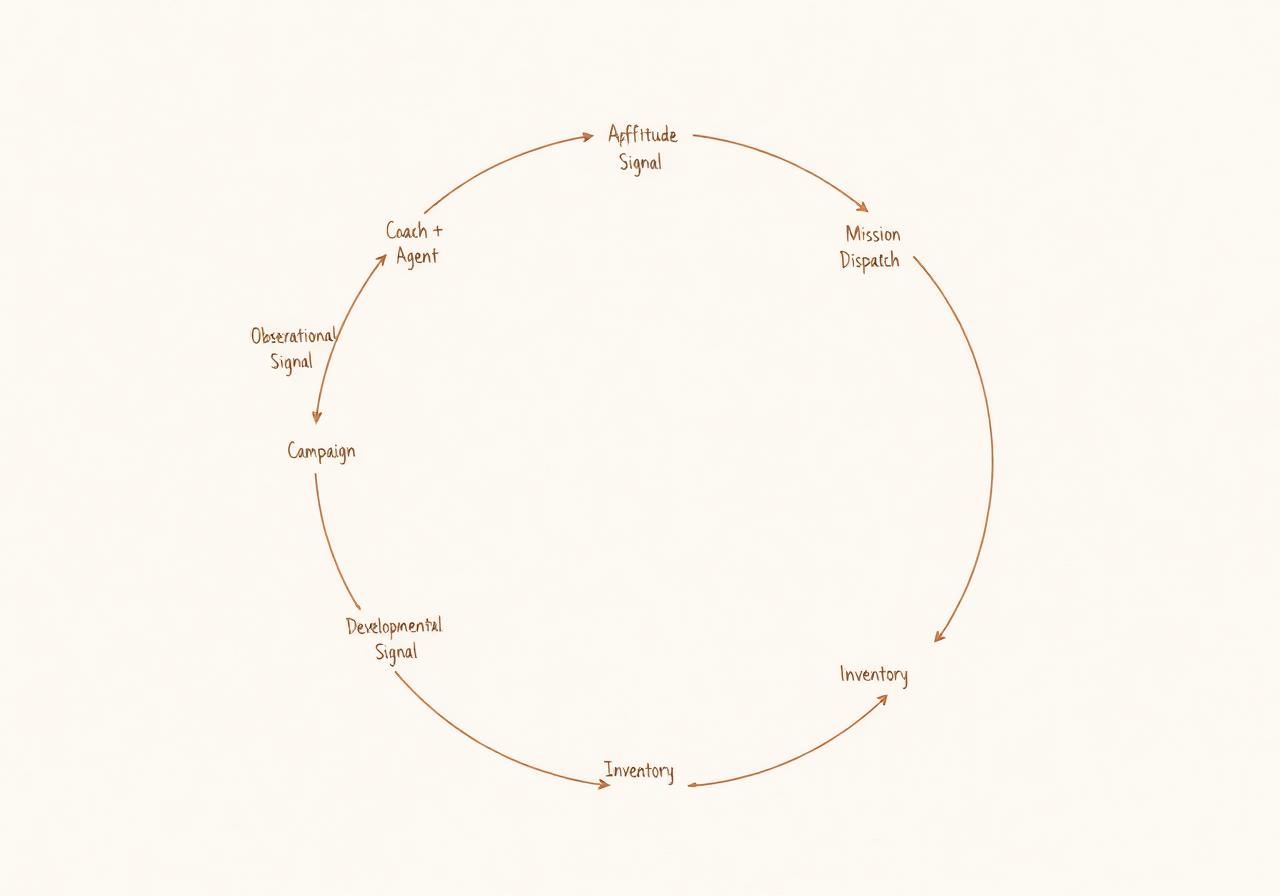
The ÆRA methodology runs on three software systems that cannot be understood in isolation. They are one operational loop, viewed from three angles.
The Aptitude Map tracks where each child is — hundreds of small competencies across six Realms, updated continuously by the coach with AI assistance. The child sees the same territory as an illustrated Adventure Map. Same data. Two completely different experiences of it.
The Developmental Signal tracks who each child is — how they regulate, what ignites them, what their signals look like before distress becomes visible. This is the methodology's most sensitive instrument. It informs everything without being visible to the child.
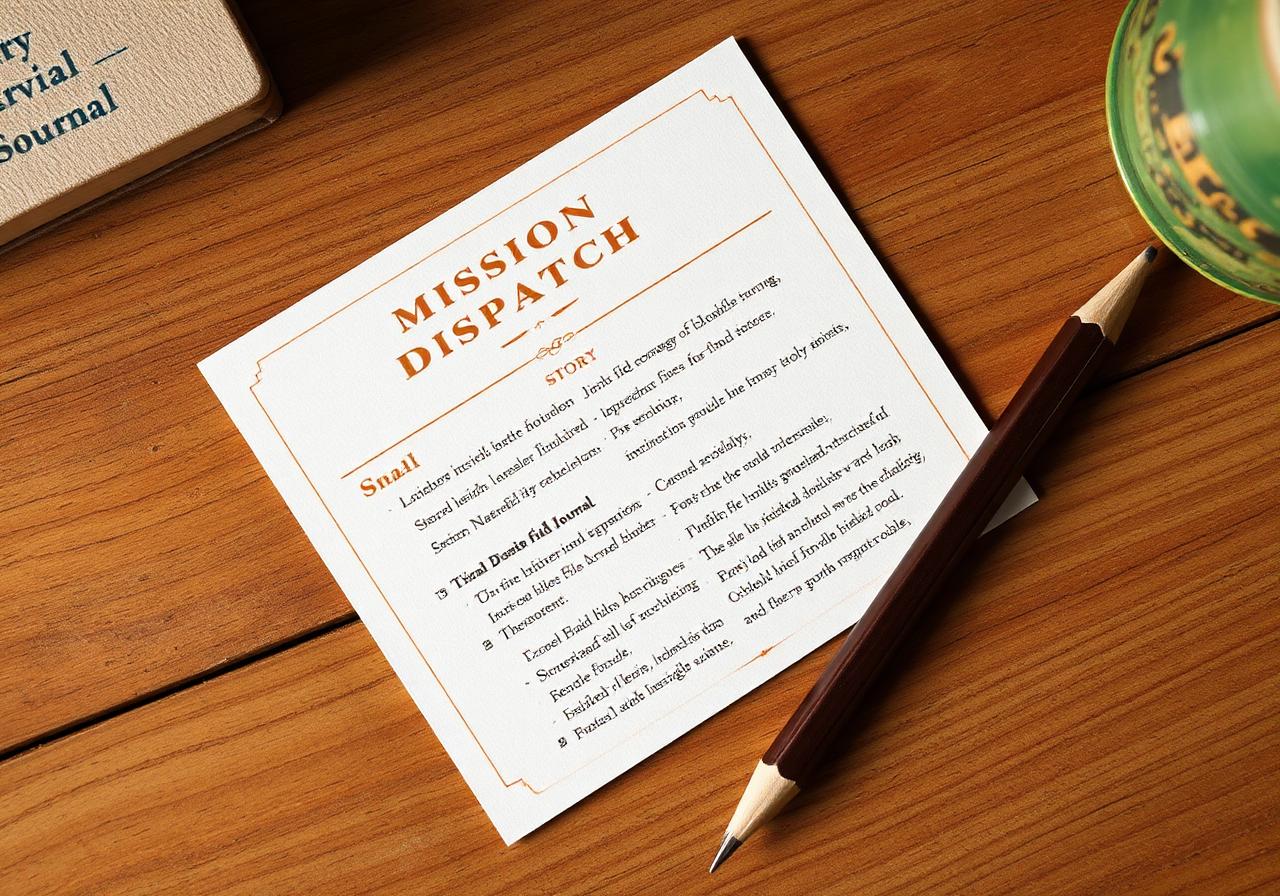
The Mission Dispatch is the output the loop generates — printed, illustrated activity sheets tied to the current Campaign chapter, calibrated to what the map and the signal say each child or guild is ready for.
The loop works like this: the map shows what a child is ready to learn. The signal shows how they learn best. The Campaign provides the narrative context. The coach adds their own creative vision — project ideas, found objects, things they are excited about. An intelligent agent synthesises all of this and proposes guilds, missions, and dispatch formats. The coach reviews, adjusts, decides. The children choose within the frame the coach sets. The dispatches are printed. The work happens. The map updates. The signal deepens. The loop continues.
No part of this loop is automated. The agent proposes. The coach decides. Always.
2. The Aptitude Map
What it is
A non-linear skill tree tracking hundreds of small, specific competencies across all six Realms — Logic, Forest, Word, Making, Body, Sound. Not a progress bar. Not a checklist. A constellation: clusters of confidence, active frontiers, and territories not yet reached.
The map is maintained by the coach with AI-assisted tools. Updated after observation, not on a schedule. The AI suggests updates based on what it sees in the coach's Rhythm Notes and Mission Dispatch outcomes. The coach reviews and confirms. The AI proposes. The coach decides.
No node is ever marked failed. Children simply have not reached it yet. This is not semantic nicety — it is a design principle that shapes how the coach speaks, plans, and sees. The research on teacher expectation effects (Rosenthal & Jacobson, 1968) is unambiguous: what an adult believes about a child before interacting with them measurably affects that child's outcomes. A map that marks failure trains the coach's eye toward deficit. A map that marks what is ready next trains the coach's eye toward possibility.
The evidence basis for the map is direct: Bloom's two-sigma study (1984) showed one-to-one tutoring produces outcomes two standard deviations above classroom instruction. The constraint has always been cost. The Aptitude Map makes the close individual attention that the research recommends viable at cohort scale — for one coach managing a mixed-age group of up to twenty children.
Two views of the same territory
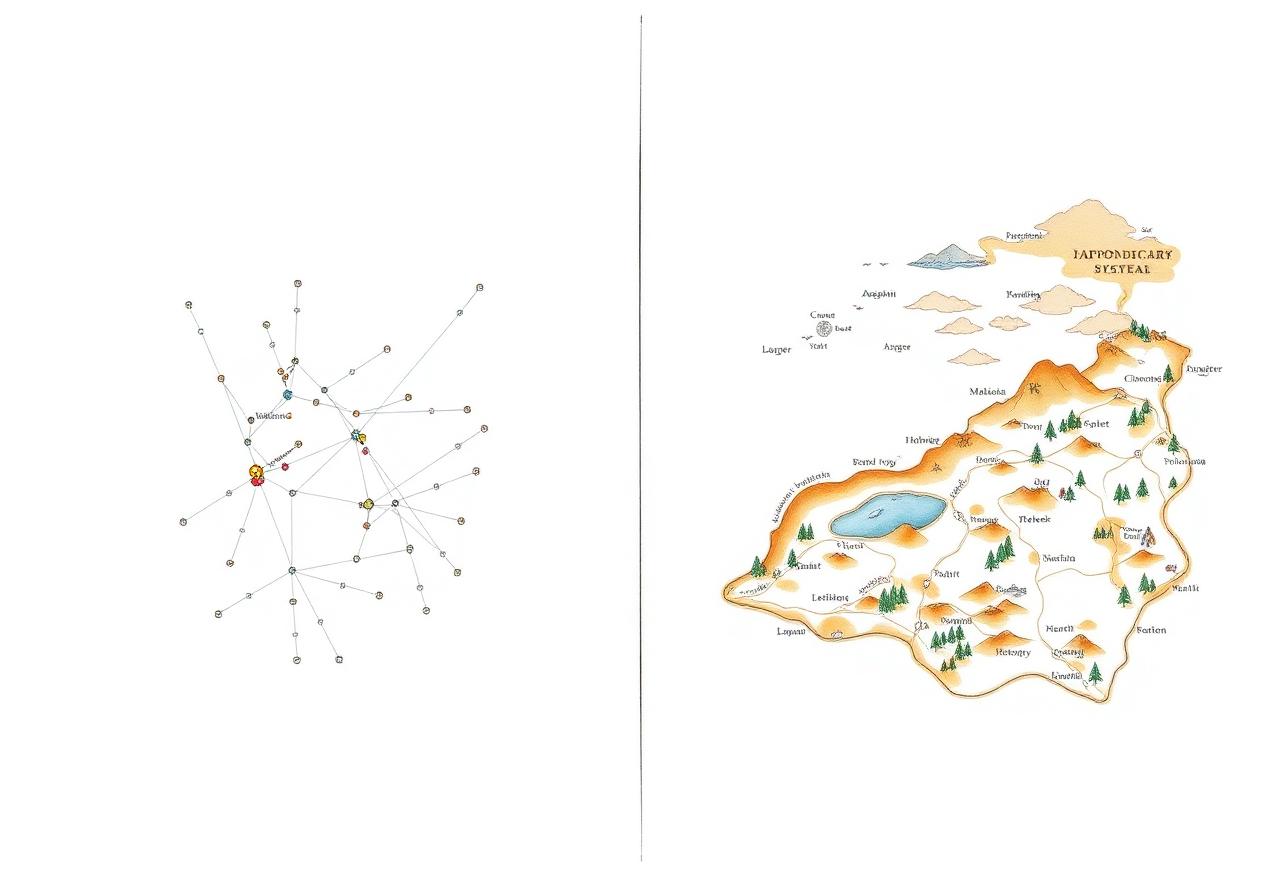
The coach's view is an analytical constellation. Nodes organised by Realm. Colour-coded by status: mastered (steady), active (in motion), ready (adjacent and reachable), and distant (not yet approached). The coach reads the shape of each child's range: where are the clusters? Where are the gaps? Which adjacent nodes are most reachable from where the child currently stands?
The child's view — the Adventure Map — is an illustrated landscape of the same territory. Named regions instead of Realm labels. Paths walked instead of mastered nodes. Horizons instead of gaps. The child traces their journey across the landscape. They do not see skill codes or status colours. They see a world they are exploring.
Same data. Two completely different experiences. The coach sees a diagnostic instrument. The child sees an adventure.
How the map is updated
The coach observes during Ateliers, Seminars, Free Play, and the Collective Quest. When they see something — a child cracking a skill node they have been approaching for days, or a child whose apparent confidence in a node turns out to be surface rather than deep — they update the map. Updates happen in the moment, noted quickly on a tablet or written and entered at end of day.
The AI assists: after a Mission Dispatch is completed, the system proposes map updates based on what the dispatch exercised and the coach's brief notes on how it went. The coach reviews and confirms, modifies, or rejects. The map is never updated without coach confirmation.
The Seminar — the map in action
The Seminar is the primary instructional instrument in Phase I: two or three children pulled from the Atelier for a focused ten- to twenty-minute session, grouped by skill node readiness — never by age.
The map makes this possible. The coach identifies children who are standing at the same threshold in any Realm and groups them for a targeted session. The age difference is irrelevant. What matters is that all three children are ready for the same thing.
In practice: Maya and Theo
Maya is seven. Theo is nine. They have nothing in common by the logic of conventional schooling — different ages, different social groups, different strengths. But the Aptitude Map shows they are standing at the same threshold: measurement vocabulary. Both have strong arithmetic foundations. Neither has cracked the language of volume and flow — litres, rate, capacity.
The coach groups them for Tuesday's Seminar, alongside Lena, age eight, who is at the same node. The three spend fifteen minutes with the coach working through a measurement challenge tied to the current Campaign chapter — calculating how much water the forest community needs per day. The numbers are arithmetic. The language is measurement vocabulary. The context is a story they have been living inside for three weeks.
By Thursday, all three have moved through the node. The map updates. The constellation shifts. The next threshold becomes visible.
3. The Developmental Signal
What it is
Running alongside the Aptitude Map is the Developmental Signal system — the methodology's most sensitive instrument and its most significant research contribution.
The Aptitude Map tracks competency: what a child can do. The Developmental Signal tracks the person: how they regulate, what their signals look like before distress becomes visible, what environments and partnerships bring out their best work, what entry points they need to begin a new task.
This is not diagnosis. Coaches are trained observers, not clinicians. The distinction must be maintained absolutely. The Developmental Signal is a coach's accumulated knowledge of a specific person, made portable and analytically useful — not a clinical profile.
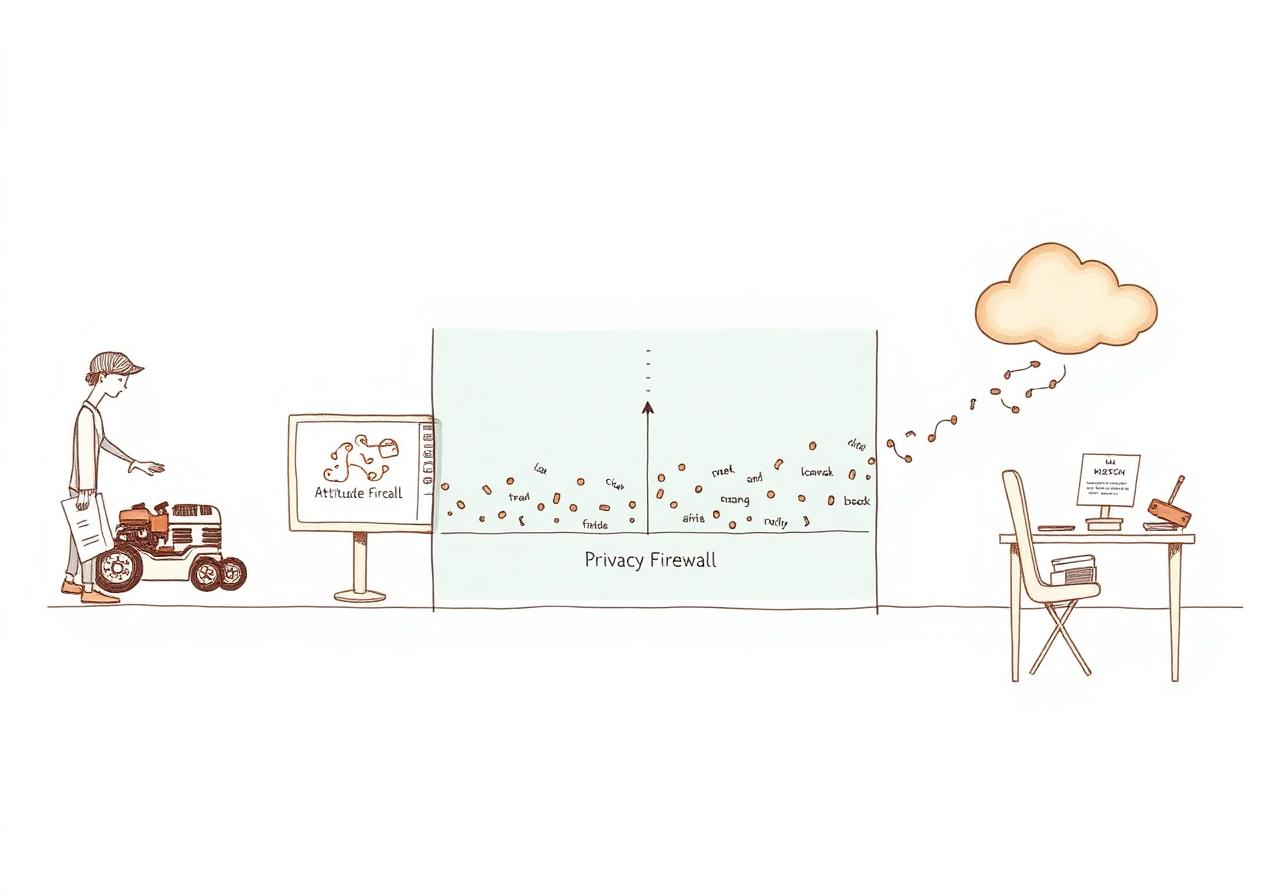
All Developmental Signal data is among the most sensitive data the methodology holds. It is family-owned, end-to-end encrypted on the Chapter Node, and never reaches external AI agents under any circumstances. The Privacy Firewall architecture exists specifically to ensure this. Full specification: Data Sovereignty Truth Document v1.1.
Three instruments
Rhythm Notes are a qualitative, narrative observational record maintained by the coach. They capture: when this child is at their best; what tends to dysregulate them; what they reach for when struggling; what ignites them unexpectedly; what their signals look like in the five to ten minutes before distress becomes visible. Rhythm Notes record behaviour only. They are private to the coaching pair. They are never shown to the child or parent in raw form.
The Living Signal Model is the pattern layer built on top of Rhythm Notes over time. Where Rhythm Notes capture day-to-day observations, the Living Signal identifies regularities: preferred entry points (how this child tends to begin new learning), productive challenge thresholds (where their stretch zone sits), social energy patterns (who produces flow, who produces friction), and attention rhythms (when focus peaks and fades across the day). The Living Signal informs guild formation, seminar grouping, and mission dispatch design.
Everything in the Living Signal carries a date. Patterns that are not reinforced by further observation fade in weight over time. Nothing is ever marked confirmed. The model is held lightly and updated continuously.
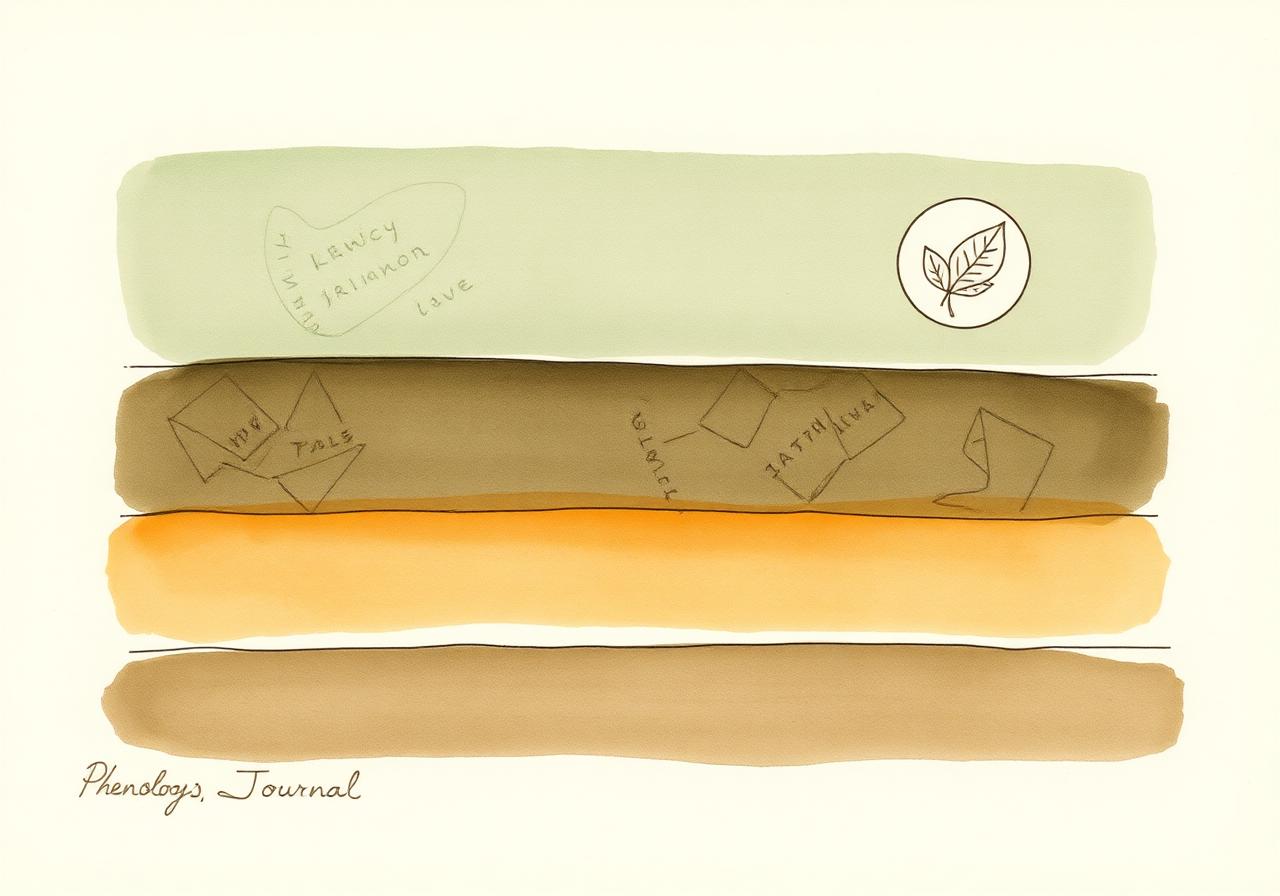
The Phenology Journal is the child's own instrument: a circular, illustrated seasonal observation record maintained across their entire time in the programme. Not assessed. Not part of the Aptitude Map. Not accessible to the AI. Handed back to the child when they leave.
The enrolment orientation
At enrolment, three inputs create a starting orientation — weighted lightly and held loosely.
A parent intake questionnaire — short and structured. Known sensitivities, relevant history, what works at home. A child self-assessment — a visual, illustrated activity the child completes themselves. Low-stakes, not diagnostic. And a cross-reference: where parent and child inputs align, those signals carry slightly more weight in the early weeks. Where they diverge, the divergence itself is informative.
The safeguard is structural. The lead coach reads the enrolment data. The assistant coach does not — not in the first half-term. The assistant forms their own observations independently. After the half-term calibration, the two sets are compared. This is the Rosenthal-Jacobson design decision made operational: protect the assistant's fresh eyes from the weight of prior expectation.
The line between noticing and diagnosing
This line is the most important professional boundary in the coaching role. Holding it absolutely is non-negotiable.
Noticing is the coach's territory. Diagnosing is not.
The distinction is not always obvious. Orientation examples:
Noticing (coach's territory): "Elias becomes consistently dysregulated after whole-group music sessions. Settles within ten minutes when given physical work. Produces best writing late morning. Avoids eye contact when anxious but seeks it when confident."
What the coach writes: "Elias dysregulates after sustained group sound. Physical Realm activity for ten to fifteen minutes resolves it consistently. Best writing window: 10:00 to 11:30."
What the coach does not write: "Elias may have auditory processing difficulties" or "Elias shows signs of sensory processing disorder."
The referral protocol activates not when the coach notices a pattern — noticing patterns is the coach's job — but when the pattern is outside normal developmental range, sustained across multiple contexts and multiple weeks, and not responsive to normal coaching adjustments. The pathway is clear: notice, document, consult the lead coach (if assistant), refer to a qualified professional. The coach's role: notice and refer. Never interpret or act on a clinical hunch.
In practice: Priya and the entry point
By week eight, the Living Signal for Priya shows a clear preferred entry point: she needs to see the whole before she begins any part. This is a stable pattern across all six Realms.
Give her a Mission Dispatch that opens with the full story context before the first task and she produces her best work. Give her one that opens mid-task and she stalls for fifteen minutes — not because the task is too hard, but because she cannot locate herself in it.
The coach designs her dispatches accordingly: always the full chapter context first, tasks following. The adjustment takes thirty seconds in the dispatch generation tool. The difference in Priya's output is visible within the week.
This is the Living Signal in its simplest and most powerful form: a pattern that once identified changes the quality of the match between the child and the work. Not a label. Not a diagnosis. A piece of knowledge about a specific person that makes the system work better for them.
4. The Campaign, the Inventory, and the Mission Dispatch
The Campaign
The Campaign is a continuous, generative narrative that ties all learning together across Phase I. Not pre-planned — it evolves based on what the class is actually mastering. When children unlock a new skill cluster, the next chapter requires exactly that skill.
The Campaign is not a motivational technique layered on top of a conventional curriculum. It is the primary delivery mechanism for foundational skills, grounded in Jerome Bruner's research on narrative cognition (1991): children think in stories before they think in abstractions. Concepts acquired through narrative context transfer more reliably than those acquired through decontextualised drill.
Every Mission Dispatch is a chapter the children are collectively writing. Every exercise has a purpose beyond the exercise itself. The child practises letter formation because the story requires a letter to be written to the Forest Council. They practise measurement because the aqueduct needs calculating. They practise nature writing because the community has demanded a report on what the soil survey found.
The Inventory
A living catalogue of what is physically available.
Materials arrive through parents, purchases (governed by the children through the Guild Council budget), donations, and salvage. Objects are catalogued and — critically — broken down into constituent parts. A lawnmower is not logged as "one lawnmower." It is logged as: working 4-stroke engine, steel chassis, four wheels with axles, drive belt, blade assembly. Each part becomes a potential mission element.
The inventory is connected to the Mission Dispatch system. When the agent generates dispatch options, it knows what is on the shelf. A mission that requires pulleys only appears if pulleys are available — or if acquiring pulleys is itself a mission worth generating.
Children participate in the inventory process. Disassembly can itself be a Mission Dispatch — a Making Realm exercise in which children catalogue, measure, draw, and describe the components of a donated object. The broken lawnmower that arrives through a parent becomes, in sequence: a disassembly mission, an inventory update, a set of available components, and eventually part of a future build mission. Nothing is wasted.
How a Mission Dispatch is generated
The coach opens the dispatch tool. They have three kinds of input:
From the map: the skill nodes the system has identified as ready across the group — the thresholds where the most children are clustered. These are the learning targets.
From their own imagination: the coach's idea for this week's project. "I want to build a go-kart." "There's a storm-damaged oak near the north trail — can we use the timber?" "The broken lawnmower engine could power something interesting." The coach is not a passive operator reading system outputs. They are a creative collaborator with ideas of their own.
From the network repository: project ideas shared by coaches across the network. Field-tested missions from other schools, with children's reflections and coach ratings attached. Searchable by Realm, by skill node, by available materials. A coach in Amsterdam who designed a brilliant canal water filtration mission shares it. A coach in Sintra finds it, adapts it to their context, and runs it.
The agent takes all three inputs — map data, coach ideas, and available inventory — and proposes dispatch options. The Prompt Construction Service tokenises all references: skill node identifiers become ephemeral tokens, child names are never transmitted, Rhythm Notes and Living Signal data never leave the Chapter Node. The external AI (Claude or equivalent) generates content against the tokenised prompt: Campaign chapter context, skill targets, and available materials.
Thirty seconds later, a draft dispatch returns. The coach reviews it, adjusts difficulty, modifies the narrative framing, and prints it. The external AI saw no child names, no developmental profiles, no sensitive data. It saw tokens, curriculum context, and a story. The child receives a printed sheet that feels like it came from the story. It did.
In practice: the aqueduct and the lawnmower
The current Campaign chapter has the class building an aqueduct for a forest community that has lost access to its spring. The Aptitude Map shows six children in the group are active on measurement vocabulary nodes — specifically volume and flow rate.
The coach generates a Mission Dispatch: "The Forest Engineers," Chapter 7. Three tasks: measure the volume of water the community needs per day (arithmetic in the Logic Realm), write a report to the Forest Council explaining the problem (descriptive writing in the Word Realm), draw a cross-section of the aqueduct showing how water will flow (technical illustration in the Making Realm).
The child receiving this dispatch is not doing measurement exercises. They are solving the forest community's water crisis. The skill practice is identical to a worksheet. The experience is entirely different.
Meanwhile, the broken lawnmower that arrived last week has been disassembled by the older guild. The working engine is now in the inventory. The coach — who has been thinking about kinetic energy all week — shares an idea with the agent: "Can we build something powered by this engine? What are the children ready for?" The agent maps the idea against the inventory (engine, wheels, axles, belt — all available), the skill nodes (several children approaching mechanical advantage and force in the Logic Realm), and the current Campaign (the forest community also needs a way to transport water uphill). The agent proposes: a pump mechanism powered by the salvaged engine, built by a guild of four, exercising mechanical advantage, measurement, and collaborative design. The coach likes it. The dispatch is generated. The Campaign now has a pump chapter.
5. Guild formation
How guilds form
Guilds are the small working groups that form and reform throughout Phase I. They are not fixed. They are not random. They are the product of a three-layer process in which the agent, the coach, and the children each contribute something the others cannot.
Layer 1 — The agent recommends. Based on the Aptitude Map (who is ready for what), the Living Signal (who works well together, who produces productive friction, who needs a steadying partner), and the current mission requirements (what skills and how many hands), the agent proposes guild configurations. The recommendation is transparent — the coach sees the reasoning: "These three are grouped because all are at the mechanical advantage threshold, and the Living Signal shows Sena and Theo produce their best collaborative work together."
Layer 2 — The coach constrains. The coach reviews the recommendation. They might accept it. They might override it — because they know something the data doesn't. A difficult social dynamic this week. A child who needs a break from a particular partner. A family situation that has changed a child's energy. The coach sees the agent's reasoning and applies human judgment.
Layer 3 — The children choose. Within the frame the coach has set. Sometimes the choice is fully open: "Here are this week's four missions — form your own guilds." Sometimes constrained: "Pick two of these four." Sometimes the coach suggests specific configurations: "I think you three would do brilliant work on this — would you like to try?" The constraint is never hidden. The children know when they are choosing freely and when the coach is guiding.
The key design decision: the agent recommends, the coach constrains, the children choose within the constraint. Three layers of agency.
In practice: a Tuesday morning
The agent proposes four guilds for the week. Guild A: Sena, Theo, and Maya — the aqueduct measurement mission. Guild B: Lena, Elias, and Priya — the lawnmower engine pump build. Guild C: four younger children on a nature writing mission tied to the Phenology Journal. Guild D: three children on a Word Realm storytelling mission.
The coach reviews. Guild B concerns them — Elias has been dysregulated this week and the engine build requires sustained focus in a noisy Making environment. The Living Signal shows Elias settles with physical work but the engine build is fine motor, not gross motor. The coach swaps Elias to Guild C (outdoor, quieter, physical) and moves another child into Guild B.
At the Agora, the coach presents the week's missions. "Four projects this week. The aqueduct measurement, the engine pump, the journal expedition, and the story chapter. I've suggested some groups — have a look and tell me if you'd like to swap." Two children swap. The coach approves both — neither swap undermines the learning logic. The guilds are set.
Once the agent knows the final guild composition, it generates Mission Dispatches tailored to each guild — not just to the skill targets but to the specific group dynamics. Guild A's dispatch opens with full story context (because the Living Signal shows Priya — wait, Priya is in Guild B now. The agent regenerates Guild B's dispatch with Priya's preferred entry point: full chapter context first, tasks following).
6. What the child experiences
Sena is eight. She arrives at the Agora, opens her Adventure Map, and traces the path she walked last week into the Forest territory — a cluster of regions she has been exploring around seasonal observation and nature writing. She sees the horizon ahead: a mountain range labelled "The Engineers" that she has not yet entered.
She declares her Quest: she wants to write the next entry in the Phenology Journal and then work in the Making Realm on the aqueduct model. The coach notes the Quest without redirecting it.
What Sena does not know: her Aptitude Map shows she has been approaching the measurement vocabulary node that the aqueduct model requires but has not yet cracked it. This morning's Mission Dispatch — designed overnight by the coach with AI assistance — is built to reach that node through the aqueduct work she has chosen herself. The Seminar the coach will pull her into at 10:15, with Theo and Maya, exists because the map showed all three are at the same threshold. The dispatch opens with the full chapter context and the tasks follow, because the Living Signal shows Sena processes new work best when she can see the whole before the parts.
None of this is visible to Sena. She experiences a morning that feels self-directed, purposeful, and story-coherent. It is all three. It is also precisely calibrated to where she is and how she learns best.
At the end of the day, Sena earns today's Campaign fragment — the next chapter of the story — to take home and read to a parent. The Mission Dispatch she completed goes into her Mastery Ledger. The coach updates her Aptitude Map: the measurement vocabulary node has moved from "ready" to "active." The constellation shifts. Tomorrow's landscape will look slightly different.

7. What the coach experiences
Tuesday, 08:35. The children arrive in twenty-five minutes.
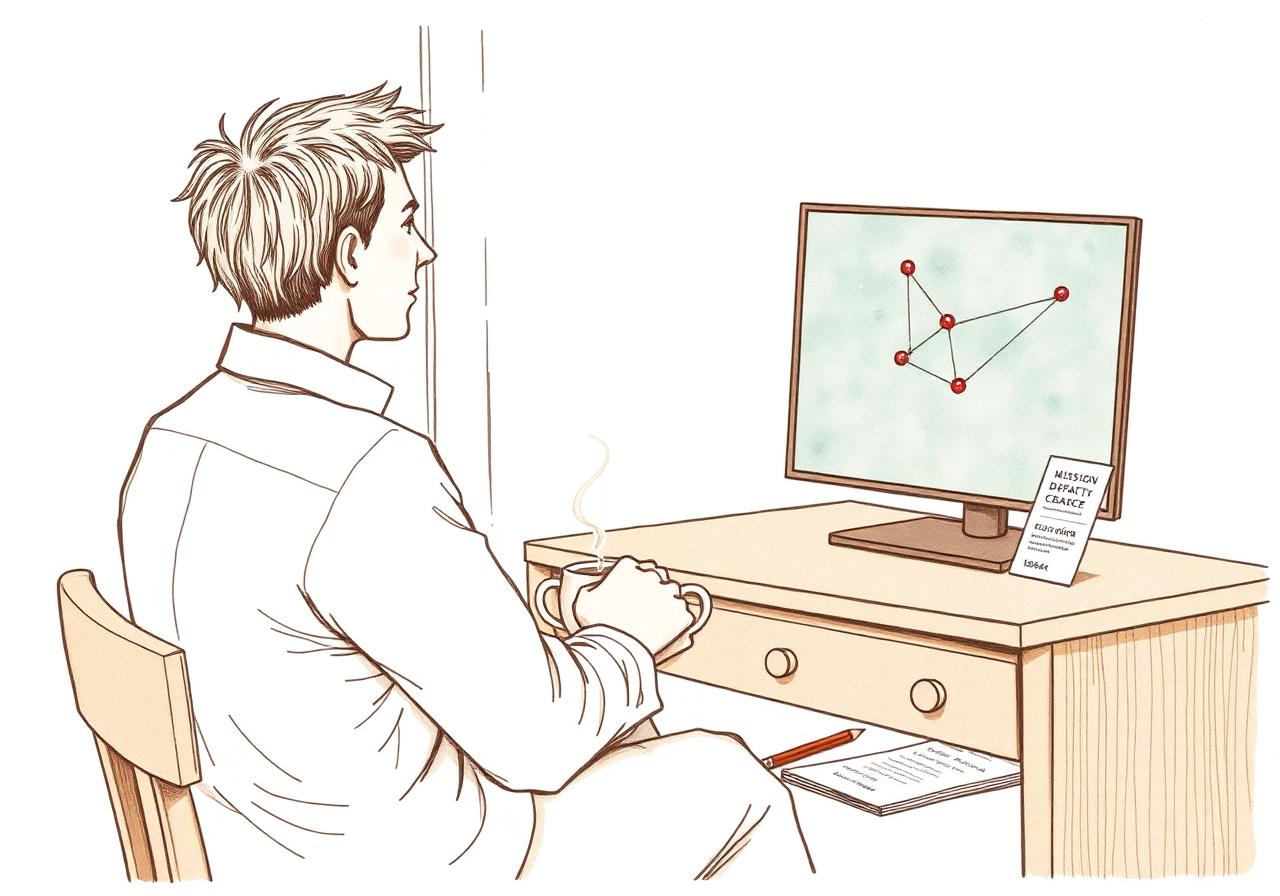
The lead coach opens the map dashboard. Overnight, the agent has processed yesterday's updates and flagged six potential Seminar groupings: three children at the same measurement vocabulary threshold, two approaching a peer-validation node in the Making Realm, one who broke through a long-standing block in descriptive writing yesterday and is ready for a harder challenge today.
The coach accepts four of the six groupings and overrides two. One grouping would put two children together who are in a difficult social dynamic this week — the data doesn't know this, but the coach does. Another grouping proposes a Seminar in the Body Realm that the coach wants to run outdoors instead, which changes the timing.
Next, the coach checks the inventory. The lawnmower engine that was logged yesterday is now visible in the system, cross-referenced against skill nodes in the Logic and Making Realms. The agent has already generated three project ideas that use the engine. One of them connects to the current Campaign chapter — the pump mechanism. The coach likes it. They add their own note: "Build the pump housing from scrap timber in the shed — the children should design the frame, not receive it."
The agent regenerates the dispatch options with this constraint. Two versions appear: one where the frame design is guided by a technical drawing, one where the guild starts from the raw timber and designs from scratch. The coach picks the second — harder, more Making Realm, more consistent with the Monozukuri ethic.
The guild suggestions appear. The coach reviews the neuroprofiling rationale for each: who produces productive friction with whom, who needs a steadying partner, whose attention rhythm peaks in the morning versus afternoon. The coach adjusts one guild, accepts the rest, and prints the Mission Dispatches.
08:55. The dispatches are on the desks. The Agora is ready. The system proposed. The coach decided. The children will choose within the frame the coach has set.
8. The network repository and the weekly paper
The repository
The mission repository is an open, network-wide library of field-tested project ideas, shared by coaches across every school implementing the methodology.
Any coach can upload a mission: what it exercised, what materials it required, what Campaign context it was designed for, how it went. Children's reflections are attached — not ratings, but reflections: what surprised them, what was hard, what they would do differently. Coach ratings surface the missions that work best. The repository is searchable by Realm, by skill node, by available materials, by age range, by season.
Upload is open. Curation is peer-driven. No editorial gate on entry — quality emerges from use and coach review. The same governance principle as the Research annotation system: signals inform; they do not determine.
Over time, the repository becomes one of the methodology's most valuable assets: a living library of practitioner knowledge that no single school could produce alone. A coach in their first year has access to the accumulated field-tested wisdom of the entire network.
The weekly paper
Each week, every school in the network produces a printed paper. A single A3 sheet folded to A4. Four pages. Printed on recycled paper. Ink only, no colour. Consistent with the field notebook register of the whole visual identity.
Page 1 — Network. Highlights from across the network. Projects, reflections, and photographs from other schools. Attributed to children's first names and the project — not to school names. No school identity attached. The reader sees the work. They do not see a league table.
Pages 2–3 — Local. Written by the coach with children's input (Phase I) or by the young people themselves (Phase II). What happened this week. What was built, grown, discovered, governed. The achievements of specific children, named and celebrated. This is the section parents read.
Page 4 — Horizons. A preview of next week. A question or provocation. A nature observation prompt for the weekend. A recipe from the Common Table.
The paper goes home with every child at the end of the week. Analogue. Paper-based. Taken home, read to a parent, left on the kitchen table. Consistent with everything the methodology says about screens, about the physicality of learning, about keeping families inside the story.
The network section inspires. The local section celebrates. Neither competes. The explicit design decision: no school names in the network section, no ranking, no comparison. Celebration and reflection, not competition.
The compilation of the network section is itself a Journeyman responsibility in Phase II — real editorial work for a real audience. The local section is a genuine journalism exercise for Phase II young people, or a coach-written community letter in Phase I.
9. The research layer
At the network level, anonymised and aggregated Developmental Signal data across schools constitutes a research dataset of genuine scientific significance. This is one of three specific AI uses the methodology endorses: AI-assisted pattern recognition across anonymised Living Signal data to identify what kinds of approaches work for what kinds of developmental patterns.
Individual child data never enters the research layer without explicit family consent. The data is anonymised and aggregated before it leaves the Chapter Node. The Privacy Firewall architecture ensures this structurally — it is not a policy, it is an engineering constraint.
The standardised Developmental Signal schema — the documented instrument that makes Rhythm Notes and Living Signal data comparable across schools — does not yet exist. Without it, the research layer generates incomparable data. This is the methodology's most significant internal infrastructure gap and it is named honestly. The schema is commissioned from affiliated child psychology researchers with a target of Q2 2027.
When the schema is complete and the network has sufficient schools contributing data, the research layer will begin to answer questions that no single school can: which approaches work for children with particular developmental signal patterns? Which guild configurations produce the strongest collaborative outcomes? Which Campaign structures produce the most durable skill transfer? These are questions the developmental science literature has not yet answered at scale — because no network has previously generated this kind of data in a standardised, privacy-preserving, longitudinal form.
ÆRA — The Map, the Signal, and the Dispatch · Version 1 · April 2026 · Open document · Freely available · Annotations welcome
Appendix A — Feature table: The Aptitude Map
| Feature | Description | Status |
|---|---|---|
| Non-linear skill tree | Hundreds of competency nodes across six Realms, organised as a graph rather than a hierarchy. Nodes connect laterally and vertically. | Designed |
| Node states | Four states: mastered, active, ready, distant. No "failed" state. | Designed |
| Coach constellation view | Analytical view showing all nodes, colour-coded by state, with cluster and gap analysis. Filterable by Realm, by time period, by activity level. | Designed |
| Adventure Map (child view) | Illustrated landscape rendering of the same data. Named territories. Paths walked. Horizons visible. No skill codes or status colours. | Designed — illustration specification needed |
| AI-assisted update suggestions | After Mission Dispatch completion, the system proposes map updates based on coach notes and dispatch outcomes. Coach confirms, modifies, or rejects. | Designed |
| Manual coach update | Coach can update any node at any time based on observation. No schedule requirement. | Designed |
| Seminar grouping engine | Identifies children at the same skill threshold across the group. Proposes Seminar configurations by skill readiness, not age. | Designed |
| EQF mappability | Each Realm's skill node clusters mapped to EQF level descriptors (Levels 1–3 Phase I, 2–5 Phase II). | Gap — specification commissioned, target Q3 2027 |
| Mastery Record transition | At Phase II entry, the Aptitude Map becomes the Mastery Record. Co-owned between young person and mentor. Progressively transparent. | Designed |
| IB / Cambridge / MTC export | Mastery Record generates qualification-specific transcripts on demand. | Designed — requires IBCP authorisation |
| Family export | Full data export available to families on request. Machine-readable format. | Designed |
| Family deletion | Full data deletion on request. Irreversible. Compliant with GDPR Article 17. | Designed |
Appendix B — Feature table: The Developmental Signal
| Feature | Description | Status |
|---|---|---|
| Rhythm Notes | Free-text observational entries. Structured by category: regulation, partnership, entry points, attention, significant shifts. Date-stamped. | Designed |
| Rhythm Notes privacy | Private to coaching pair only. E2E encrypted on Chapter Node. Never transmitted to external AI. | Designed — requires Chapter Node |
| Living Signal Model | Pattern layer derived from Rhythm Notes. Tracks: preferred entry points, productive challenge thresholds, social energy patterns, attention rhythms. | Designed |
| Living Signal decay | Patterns not reinforced by further observation fade in weight over time. Nothing is ever marked confirmed. | Designed |
| Enrolment orientation | Three inputs: parent questionnaire, child self-assessment, cross-reference. Weighted lightly and held loosely. | Designed |
| Assistant coach safeguard | Assistant does not access enrolment data or Rhythm Notes in first half-term. Forms independent observations. Calibration at half-term. | Designed |
| Referral protocol | Structured pathway from observation to qualified professional. Activates when patterns are outside normal range, sustained, and unresponsive to coaching adjustments. | Designed |
| Noticing/diagnosing boundary | System enforces behavioural-only language in Rhythm Notes. Flags clinical language for coach review. | Designed |
| Developmental Signal schema | Standardised schema for cross-school data comparability. Specifies: data fields, observation categories, update frequency, anonymisation protocol. | Gap — commissioned, target Q2 2027 |
| Research layer anonymisation | Individual data anonymised and aggregated before leaving Chapter Node. Requires explicit family consent. | Designed — requires Chapter Node |
| Guild formation input | Living Signal patterns feed into the Guild Formation Engine as partnership compatibility and learning format preferences. | Designed |
| Dispatch format adaptation | Living Signal preferred entry points inform Mission Dispatch structure (e.g. whole-context-first vs. task-first). | Designed |
Appendix C — Feature table: Mission Dispatch & Inventory
| Feature | Description | Status |
|---|---|---|
| Campaign narrative engine | Continuous, generative story across Phase I. Evolves based on class skill progression. Chapter transitions triggered by skill cluster completion. | Designed |
| Dispatch generation | Coach selects skill targets + Campaign chapter + Realm. Prompt Construction Service tokenises. External AI generates draft. Coach reviews and prints. | Designed |
| Privacy Firewall integration | All prompts tokenised before external AI contact. No child names, Rhythm Notes, or Living Signal data transmitted. Ephemeral tokens only. | Designed — requires Privacy Firewall build |
| Coach creative input | Coach can propose project ideas, themes, or constraints before generation. Agent integrates with map data and inventory. | Designed |
| Inventory catalogue | Living register of available materials. Objects broken down into constituent parts. Each part tagged by Realm relevance and potential mission use. | Designed |
| Inventory intake workflow | When materials arrive: catalogue, photograph, tag parts, log to inventory. Disassembly can itself be generated as a Mission Dispatch. | Designed |
| Inventory-aware generation | Dispatch generation checks available materials. Missions requiring unavailable materials are flagged or excluded. | Designed |
| Network repository | Open library of field-tested missions. Uploaded by any coach. Searchable by Realm, skill node, materials, age range, season. | Designed |
| Repository reflections | Children's reflections attached to completed missions (not ratings). "What surprised us. What was hard." | Designed |
| Repository peer curation | Coach and assistant ratings surface quality. No editorial gate on entry. Quality emerges from use and peer review. | Designed |
| Dispatch personalisation | Dispatch format adapted per child or per guild based on Living Signal data (entry point preferences, challenge thresholds). | Designed |
| Printed output | All dispatches are printed, illustrated, physical. No screen delivery. Consistent with Human Buffer Protocol. | Designed |
| Mastery Ledger | Completed dispatches archived in child's Mastery Ledger. Contributes to Aptitude Map and eventually the Mastery Record. | Designed |
| Weekly paper generation | Network section compiled from repository highlights. Local section from coach/child input. A3 folded to A4, recycled paper, ink only. | Designed |
Appendix D — Feature table: Guild Formation Engine
| Feature | Description | Status |
|---|---|---|
| Three-layer formation | Agent recommends → Coach constrains → Children choose within constraint. All three layers documented per guild per week. | Designed |
| Aptitude-based grouping | Groups children by shared skill readiness thresholds, independent of age. | Designed |
| Living Signal compatibility | Factors partnership dynamics, social energy patterns, and attention rhythm compatibility into recommendations. | Designed |
| Coach override | Coach can accept, modify, or reject any recommendation. Override reasoning optionally logged for research layer. | Designed |
| Constraint modes | Three modes: open choice (children form freely), guided choice (pick 2 of 4), directed (coach suggests specific groups). Mode selection by coach per week. | Designed |
| Transparent reasoning | Coach sees the agent's rationale for each recommendation: which data drove it, what the expected learning benefit is. | Designed |
| Dynamic re-grouping | If guild composition changes (child absent, swap requested), the agent regenerates dispatch formatting for the new configuration. | Designed |
| Cross-guild coordination | For Collective Quests involving multiple guilds, the engine coordinates skill coverage so all necessary competencies are represented across the combined group. | Designed |
| Guild history | Record of every guild formation across the year. Which children worked together, on what, with what outcome. Feeds research layer (anonymised). | Designed |
| Mission-guild matching | Once guilds are confirmed, the engine generates dispatches tailored to the specific guild composition — not just skill targets but group dynamics. | Designed |
Appendix E — Feature table: Network Repository & Weekly Paper
| Feature | Description | Status |
|---|---|---|
| Open upload | Any coach or assistant can upload a mission. No editorial gate. | Designed |
| Mission metadata | Each upload includes: Realms exercised, skill nodes targeted, materials required, Campaign context, age range, season, duration. | Designed |
| Children's reflections | Attached per-mission. "What we learned. What surprised us. What we would do differently." Not ratings. | Designed |
| Coach ratings | Coaches rate missions they have tried. Rating is signal for browse ordering. | Designed |
| Search and filter | Browse by Realm, skill node, materials, age range, season, coach rating. Full-text search across mission descriptions and reflections. | Designed |
| Adaptation tracking | When a coach adapts a mission from the repository, the adaptation is linked. Network can see how a mission evolves across contexts. | Designed |
| Weekly paper — network section | Auto-compiled from repository highlights. Attributed to children's first names and the project, not to school names. No competition by design. | Designed |
| Weekly paper — local section | Coach-written (Phase I) or student-written (Phase II). Covers the week's achievements, projects, and community events. | Designed |
| Weekly paper — horizons | Next week preview, nature observation prompt, question or provocation, Common Table recipe. | Designed |
| Print specification | A3 folded to A4. Four pages. Recycled paper. Ink only, no colour. Field notebook register. | Designed |
| Editorial role (Phase II) | Network section compilation as a Journeyman responsibility. Real editorial work for a real audience. | Designed |
| No school names | Network section attributes work to children and projects, never to school identity. Structural anti-competition measure. | Designed |
| Parent distribution | Paper goes home with every child at end of week. Analogue. Physical. Left on the kitchen table. | Designed |
Comment on this paper
Leave a comment for the whole paper
Reflections on direction, structure, or framing — anything that doesn't belong to a single passage. Tick the box below to mark your comment as a suggestion for the next version. A moderator reviews these before they feed into the next revision.
Sign in to leave a comment.